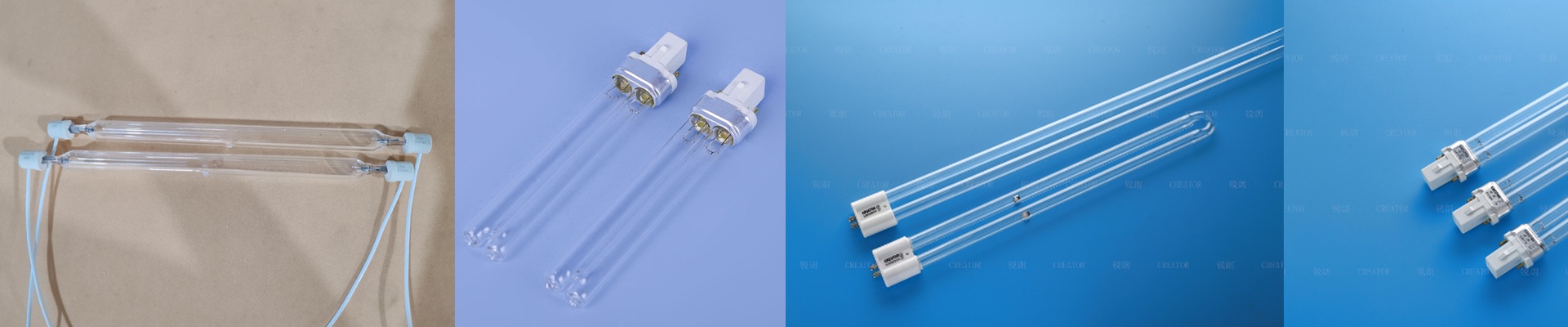
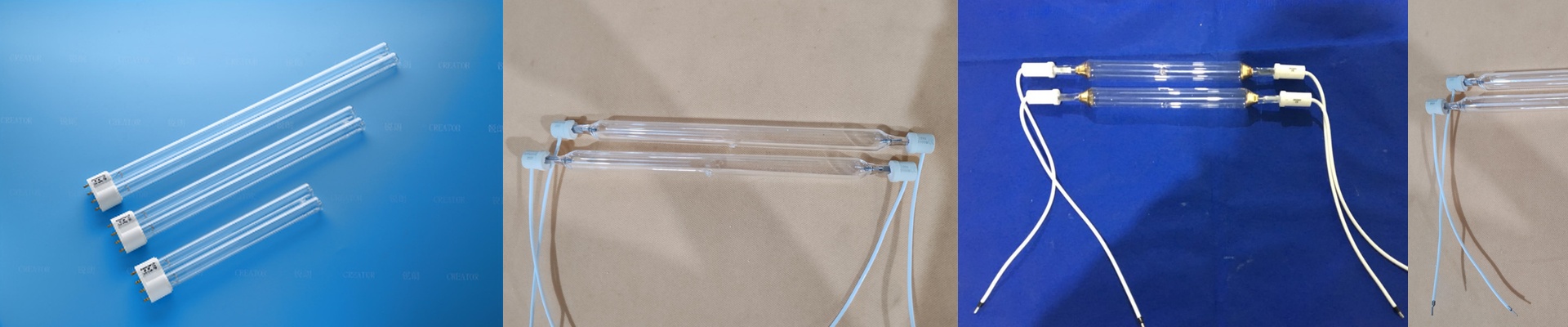
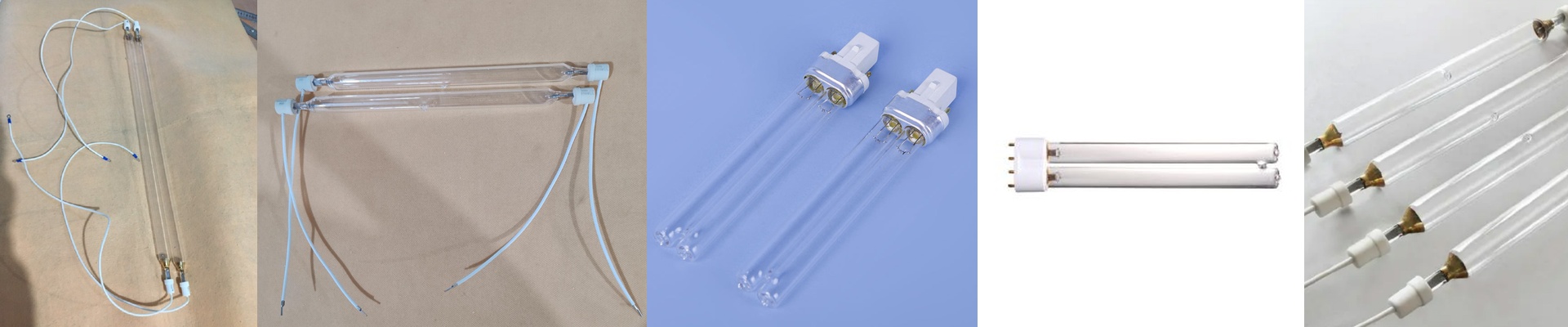
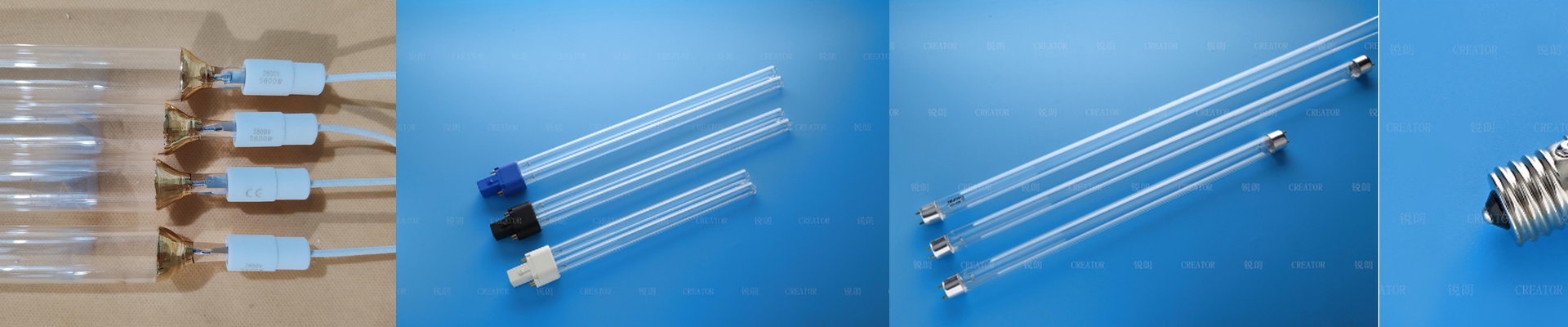
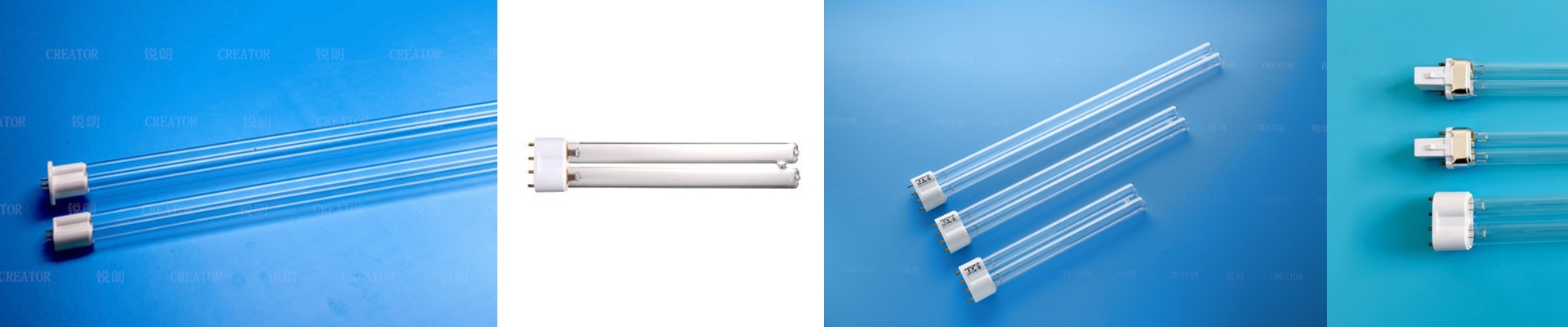
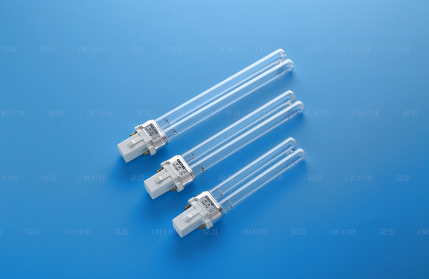
On the floor, adhesive curing isn’t “a step.” It’s the gate. If the bond line doesn’t get the right energy density in the right window, the line either stops or ships scrap. If you supply printing, converting, and assembly operations, your customers need a UV lamp they can count on shift after shift—and the compliance paperwork that gets the purchase order approved. We build CE-certified UV lamps for adhesive curing the way production runs: stable spectral output, controlled peak irradiance, and a lamp envelope that survives long duty cycles. These are meant to live in continuous-duty UV curing systems, where downtime isn’t a “maintenance issue,” it’s lost throughput.
What actually matters under the hood
Adhesive curing is photochemistry first, heat second. The lamp has to deliver photons at wavelengths that match the adhesive’s photoinitiator absorption, and deliver enough radiant energy to drive cross-linking through the full thickness of the bond line. We design around two pillars: wavelength control and dose repeatability.
- **Spectral output.**For a lot of adhesives, the main output sits at 365 nm, with added energy around 385 nm and 405 nm to help surface cure and depth penetration. Match the spectrum to the adhesive chemistry and the photoinitiator absorbs efficiently. A mismatched spectrum just turns into wasted heat.
- **Peak irradiance and energy density.**Peak irradiance (mW/cm²) sets how quickly the surface hits the activation threshold. Energy density (mJ/cm²) determines whether the entire bond line cures. We specify lamps to deliver repeatable irradiance across the curing window so you can lock in a process range—say, 800–1,200 mJ/cm² at the adhesive plane—without chasing drift from lamp aging.
- **Lamp architecture.**These are high-pressure mercury vapor lamps, with quartz envelopes and reflectors optimized for UV reflection. A stable arc length and consistent electrode geometry keep output uniform across the curing zone. That matters when adhesive beads are narrow and placement tolerances are tight.
- **Reflector efficiency.**The reflectors are coated to maximize UV reflectance and cut stray IR. That reduces substrate heating and lets you get higher usable UV intensity at the bond line without overheating sensitive parts.
- **Ozone management.**We offer ozone-free configurations using specialized quartz and coatings that suppress ozone generation. That simplifies ventilation and keeps operators and nearby equipment out of the hot zone.
- **Lamp life and stability.**Output isn’t constant forever. We design for a predictable output curve, with units routinely running 5,000+ hours while holding tight tolerances. Predictable output means predictable process capability.
Why this holds up in real production
Wholesale buyers and traders lean on our CE-certified UV lamps because they cut the hidden costs that eat margins on high-volume work.
- **Throughput control.**Adhesive curing often sets the line speed. With stable peak irradiance, the curing step repeats at the same energy density cycle after cycle, so you don’t have to slow the line to compensate for lamp drift.
- **Quality consistency.**Adhesive bonds fail in the details—undercured interfaces, incomplete cross-linking, adhesion loss. When the spectral output matches the photoinitiator, you reduce rejects from chemistry mismatch, and stable energy density keeps variability within the batch.
- **Energy use discipline.**Industrial UV curing is power-hungry. These lamps are engineered to turn electrical input into targeted UV output with minimal wasted IR, so you’re not paying to heat the plant. That matters when utilities are billed on demand and the run hours are high.
- **Maintenance predictability.**Lamp replacement should be on the calendar, not a panic call. Predictable lamp life and stable output curves let you plan replacements around changeovers, so you don’t miss shipping windows.
- **Compliance and risk reduction.**CE certification means the lamp meets applicable safety and conformity requirements for the European market, and it gives wholesalers and traders the documentation chain needed for cross-border transactions. For buyers, that reduces compliance risk and speeds procurement.
The details that make or break integration
A UV lamp doesn’t perform in a vacuum. It behaves the way the system is built around it.
- **System compatibility.**Match the lamp to the curing module: reflector geometry, focal distance, and airflow have to line up. A lamp that looks “bright on paper” can underperform if the reflector is wrong or the curing distance is outside the designed range. Give us your equipment model and we’ll confirm lamp geometry, base, and connector interface.
- **Power supply and ignition.**High-pressure mercury lamps need ballasts and igniters matched to their electrical characteristics. If voltage and current profiles drift off spec, you get unstable ignition, shorter lamp life, and shifted spectral output. Use the specified driver or confirm equivalence with measured electrical parameters.
- **Thermal management.**UV curing makes heat. Even with IR control, the lamp and reflector need adequate cooling air. If airflow is short, output decays faster and you risk damaging nearby components. Plan airflow so the lamp envelope stays within its rated temperature window.
- **UV dose measurement.**If you can’t measure dose, you can’t control it. Use a calibrated radiometer to measure irradiance and integrate energy density at the adhesive plane. Without measurement, process drift stays invisible until scrap shows up.
- **Lamp handling.**Quartz envelopes are sensitive. Fingerprints, oils, and residues can create hot spots and cut output. Handle lamps with clean gloves, keep fixtures clean, and follow the installation cleaning procedure.
- **One practical trade-off.**High-pressure mercury lamps deliver high peak irradiance, but they need a warm-up to reach stable spectral output. If your process demands instant-on curing with zero warm-up, LED-UV may be the better fit. For high-throughput lines that run continuously, mercury vapor remains the practical choice for total dose and curing speed. If your business supplies production lines that live and die on adhesive curing, the lamp you specify has to deliver performance and compliance in the same package. Our CE-certified UV lamps provide the spectral output, irradiance, and reliability needed to keep adhesive curing in a repeatable process window—while giving wholesalers and traders the consistency and documentation required for global distribution.